Mobile Brake Repair — serving Bastrop County, TX
Brake Repair in Bastrop, TX — We Come to You
Squeaking, grinding, or a soft brake pedal aren't things to put off. Honest Joe's Auto brings brake repair to your home, workplace, or roadside location — pads, rotors, calipers, and hydraulic components inspected and replaced on-site, with no towing and no shop wait.
Tap what you're hearing to see how urgent it is.
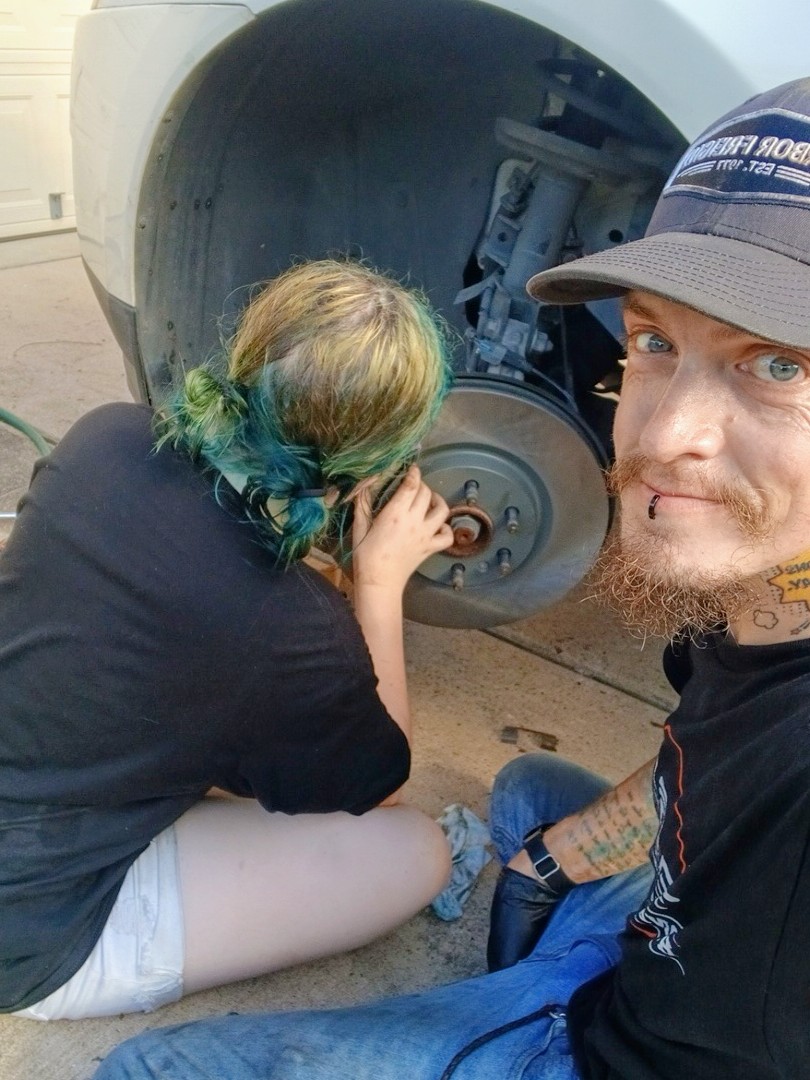
On-site brake service — no towing, no shop wait.
Signs You Need Brake Service
Brake problems tend to get worse, not better, if you wait. If you're noticing any of the following, it's worth having your brakes inspected before it turns into a bigger repair — or a safety issue.
- Squeaking or squealing when you brake — usually a worn pad wear indicator.
- Grinding noise — often means the pads are gone and metal is contacting the rotor.
- Soft or spongy pedal — can point to air or a leak in the hydraulic system.
- Vibration or pulsing when braking — often a warped or worn rotor.
- Pulling to one side while braking — can indicate a sticking caliper.
- Brake warning light on the dash, or increased stopping distance.
Grinding is the one that shouldn't wait. Once the pad material is gone, you're stopping on metal-to-metal contact, which damages rotors and calipers fast and increases both your repair bill and your stopping distance. If you're hearing grinding, treat it as urgent rather than something to schedule around.
How Often Should Brake Pads and Rotors Be Replaced?
Most brake pads last somewhere between 25,000 and 65,000 miles, and rotors typically last longer — often 40,000 to 60,000 miles — but they're usually replaced at the same time as pads once they're worn or scored. The exact interval depends heavily on how and where you drive.
Frequent stop-and-go driving, hilly roads, towing, and hard braking all wear pads and rotors faster than steady highway miles. If you're regularly hauling a trailer or driving farm equipment routes around Bastrop County, it's worth having brakes checked more often than the mileage number alone suggests. Most techs recommend a brake inspection at least once a year, or any time you're already in for an oil change or tire rotation — catching thin pads early is a lot cheaper than replacing rotors and calipers after they've been damaged by metal-on-metal contact.
What's Included in a Mobile Brake Repair?
Every brake job starts with a full inspection — pads, rotors, calipers, brake lines, and fluid — so you get an accurate quote based on what your vehicle actually needs, not a guess. Joe measures remaining pad and rotor thickness, checks for uneven wear or scoring, tests caliper movement, and looks for fluid leaks before recommending anything. He explains what's worn, what's still good, and what it'll cost before any work begins.
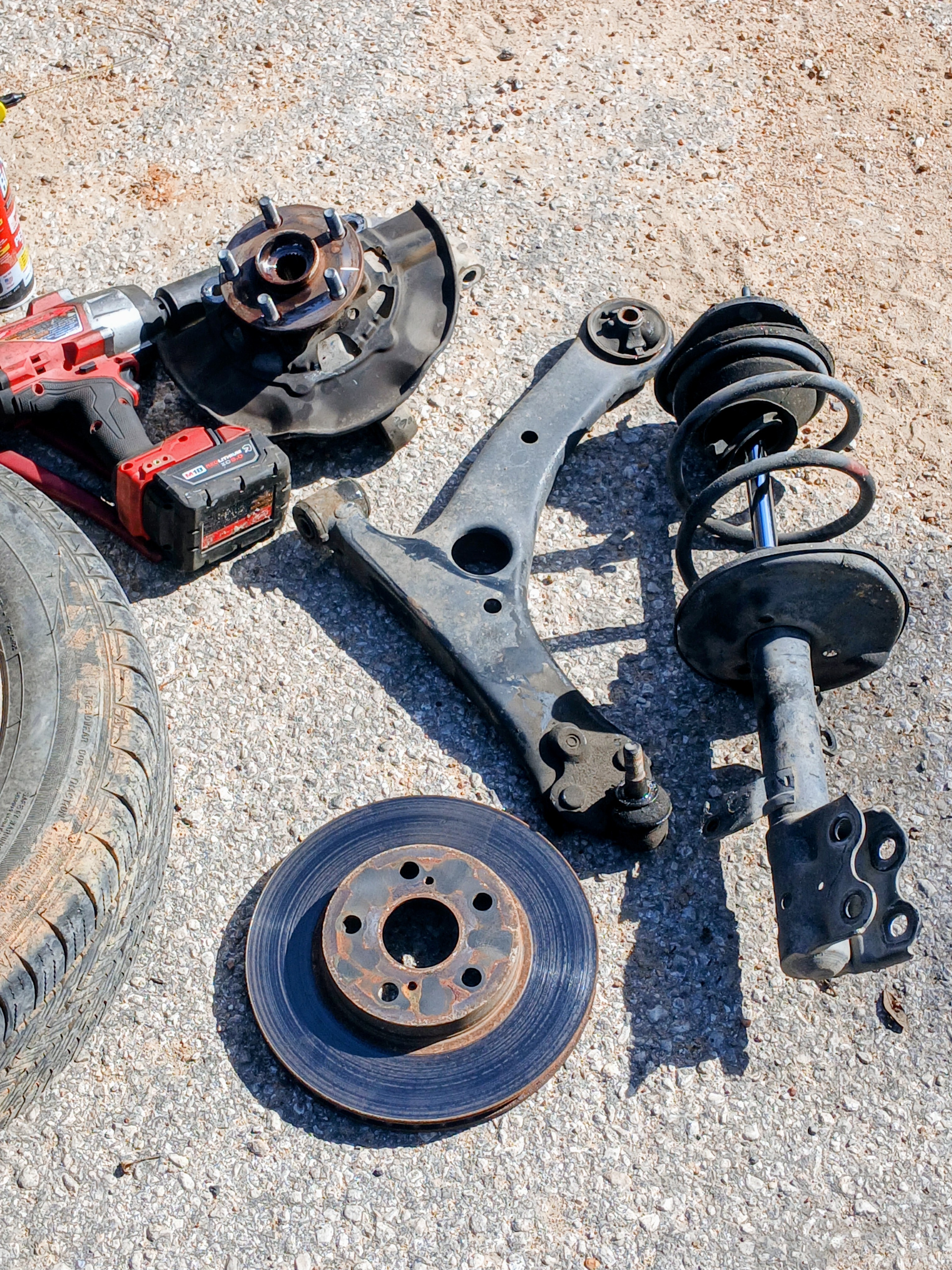
Worn rotor and hardware removed on-site.
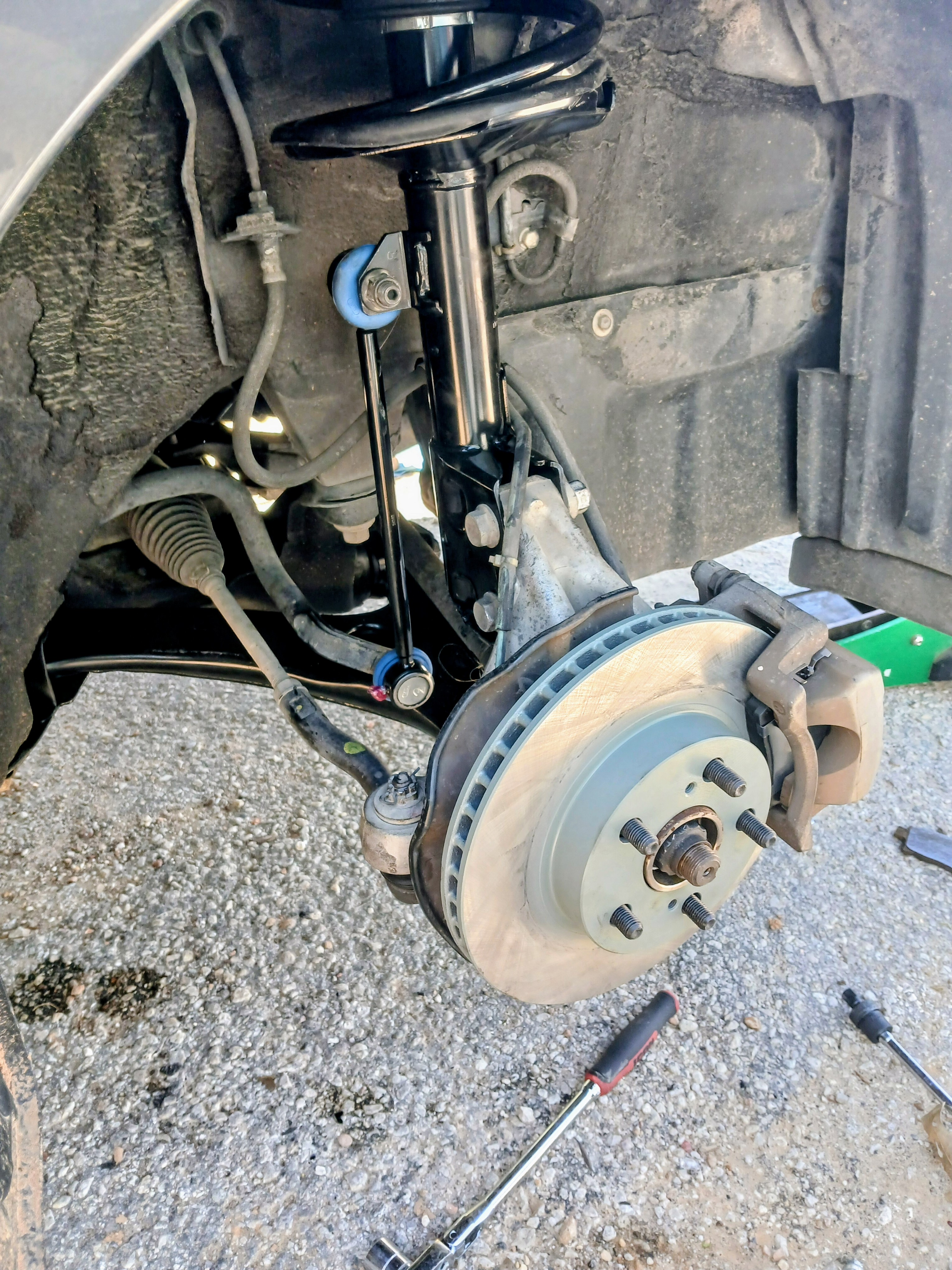
New rotor and caliper, ready to go.
Ceramic, Semi-Metallic, or Organic Pads — Which One's Right?
Not all brake pads are built the same, and the right choice depends on how you actually drive. Ceramic pads run quiet and clean, with minimal brake dust — a solid default for everyday driving around Bastrop. Semi-metallic pads handle heat better and offer stronger stopping power, which makes them a better fit if you're towing or hauling equipment regularly, though they produce more dust and can run louder. Organic pads are the softest and quietest but wear fastest and offer the least stopping power, so they're less common as a primary replacement.
Joe will talk through which option fits your vehicle and how you drive before installing anything — there's no upsell to a pad you don't need.
Why Choose a Mobile Mechanic for Brake Repair?
Brake work is one of the most common repairs that doesn't require a lift or a shop bay — which makes it a great fit for mobile service. Joe comes to your driveway, workplace parking lot, or roadside location and handles pads, rotors, and calipers right there. Lower overhead means fair pricing without cutting corners on parts or quality.
Joe is factory-trained with Chrysler, Jeep, Dodge, and Toyota, and has 15 years of experience across most makes and models — including tracking down brake noises other mechanics have missed.
Mobile Brake Repair Near You
Honest Joe's Auto provides mobile brake service throughout Bastrop County and the surrounding region, including Bastrop, Elgin, Smithville, Cedar Creek, Paige, Red Rock, Round Top, and Giddings — covering Bastrop, Travis, Lee, Caldwell, and Fayette counties. If you're just outside these areas, reach out anyway; there's often flexibility, especially for brake safety concerns.
Brake Repair FAQ
How much does brake repair cost in Bastrop, TX?
Squeaking vs. grinding — how do I know how urgent this is?
How long does a mobile brake job take?
Can brake repair really be done in my driveway?
Do you replace rotors, or just pads?
Is it safe to keep driving if my brakes are grinding?
Why are my new brakes squeaking?
How often should my brakes be inspected?
Do you do brake fluid flushes?
My brake warning light is on but I don't hear any noise — what does that mean?
How do I schedule brake service in Bastrop?
Hearing Something Off When You Brake?
Don't wait for a squeak to turn into a grind. Book a brake inspection and Joe will come to you.
Book a Brake Inspection Call or Text (512) 722-7776